
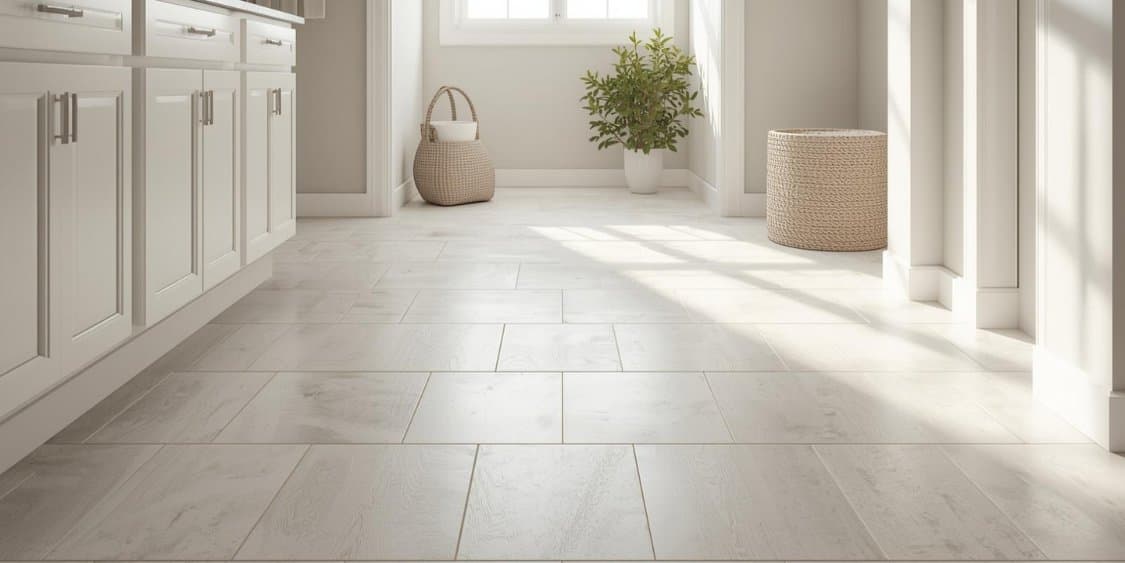
Mop the kitchen floor, let it dry, and get down on your knees with a flashlight held flat against the tile. The tile faces will look clean. The grout lines will tell a different story, and most of what you'll see in them got there from the mop.
That sounds backward, so here's how it happens.
Grout is the low, porous part of the floor
Tile is fired and usually glazed. Liquid beads up on it and wipes off. Grout is a cement-based mix packed between the tiles, and it's full of tiny pores. It also sits a little lower than the tile surface, so anything that gets loose on the floor naturally ends up in those lines.
When you mop, the first few strokes pick up dirt from the tile. After that, the mop and the bucket water are carrying that dirt around the room. Every pass deposits some of it back down, and the grout, being lower and absorbent, catches it. Wring the mop into the same bucket for the whole house and by the last room you're spreading gray water. Give it a few months and the grout has turned a darker, uneven gray, darkest in front of the sink, the stove, the back door, and the path to the garage.
Yards around here make it worse. A lot of lots in and around Humble sit on sandy soil or sticky clay, and after a summer storm the back patio turns into a supply line for both. Sand is abrasive and grinds into the grout as people walk on it. Clay stains. Kids and dogs coming in through the back door after a rain can undo a freshly mopped kitchen in about ten minutes, and the grout near that door is almost always the darkest in the house.
The kitchen gets it worst because cooking adds grease. A thin film of oil settles on the floor around the stove and holds onto dust. Bathrooms get hair spray, powder, and water drips.
Why the floor feels sticky
A tile floor that feels tacky under bare feet almost always has product buildup. Floor cleaners that promise shine often leave a film, and using a little extra "to get it really clean" makes it worse. That residue grabs dirt, so the floor looks dull a day after you mop it, which leads to more mopping with more cleaner. It's a loop.
The fix is boring: use less product, rinse with plain water now and then, and change your mop water often. If the floor still feels sticky, the film has built up past what a mop can strip.
Where DIY grout cleaners stall
A grout brush and a cleaner will lighten the top of the line, which is satisfying for about a month. They rarely reach what's packed down into the pores. And harsh scrubbing with a stiff wire brush or acidic products can wear grout down, leaving it rough and recessed so it collects dirt even faster.
How our machine buffer clean works
We clean tile floors with a machine buffer. The technician runs it across the floor with a cleaning solution, and its steady, even scrubbing works into the grout lines and breaks the bond between the soil and the grout surface. That loosened soil and old cleaner film is then picked up off the floor so it doesn't settle back in. Nobody on their knees with a brush can keep that pace across a whole kitchen. The pressure stays even, too, so the grout gets cleaned without getting chewed up.
Before any of that, we walk the floor with you and look at what's there: the type of tile, the condition of the grout, any cracked or missing grout, and the worst traffic areas. Those get pre-treated. Problem spots near the stove or the back door may get a second pass.
Most floors come out noticeably lighter in the grout lines, often close to the original color, and the tile surface loses the dull film. Grout that's stained from a spill that soaked in years ago, or grout that's cracked and crumbling, won't come back to new. Cleaning can't repair it. We'll point those spots out before we start, so you're not surprised.
Keeping it cleaner between visits
None of this needs special equipment:
- Sweep or vacuum before you mop. Grit left on the floor turns into mud in the mop water.
- Use a pH-neutral floor cleaner and use less of it than the bottle suggests.
- Change the mop water every room or two. If it's gray, it's done.
- Wipe spills when they happen, especially grease, juice, and coffee, before they seep into the grout.
- Put mats at the back door and the garage door to catch what's tracked in, and shake them out often.
- Every few months, run a soft brush along the grout in front of the stove and sink.
For a kitchen and entry in a busy household, professional tile cleaning once a year keeps the grout from getting away from you. Homes with lighter grout, pets, or a lot of yard traffic coming in through the back may want it every six to nine months.
If your grout has turned a color you didn't pick, grab the $45 tile coupon from /coupons/ first. Reserve a slot through /schedule-online/, or ring us at 346-662-0980 and we'll look at it together when we arrive.