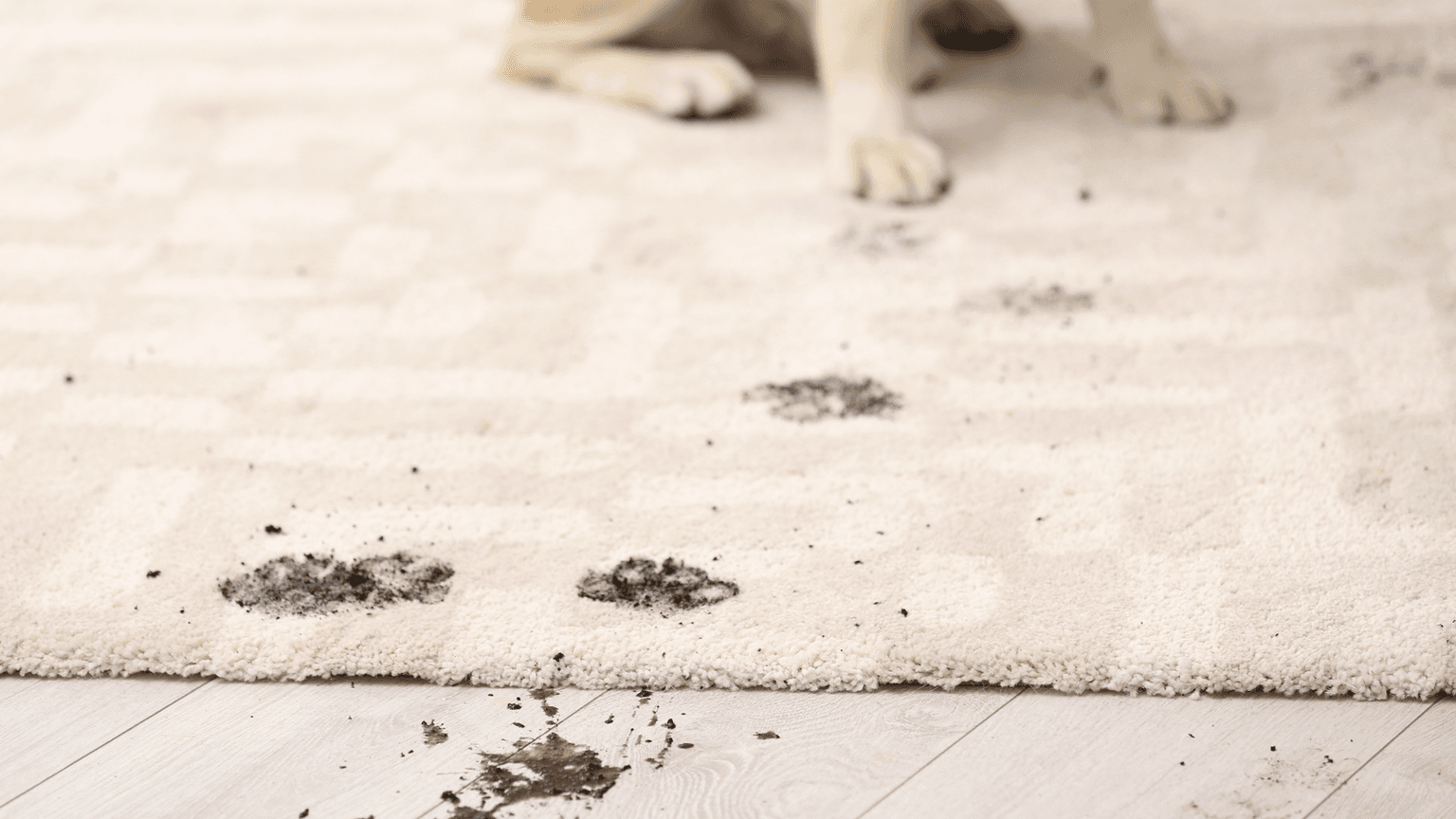
You clean the spot. It looks fine. Then a summer storm rolls through, the air turns thick, and by evening the back bedroom smells like the cat again.
That cycle is the most common call we get about pets, and it has a plain explanation. Urine sinks. It runs through the backing and spreads into the pad underneath, often in a patch two or three times wider than the stain you can see. When it dries, it leaves salts and uric acid behind. Moisture in the air wakes them back up, and the bacteria feeding on them start producing odor all over again. A spray from the grocery store treats the top quarter inch. The problem is an inch down.
Finding every spot
We start with the lights low and a UV lamp. Old urine glows under it, even spots that faded into the carpet color years ago, and we mark each one with you watching: along the baseboards, behind the couch, inside closets, the corner by the sliding door where the old dog used to wait. People are often surprised by how many there are. Pets pick a few favorite places and go back to them.
That map matters, because the treatment only works where it's applied. Miss a spot and the room still smells, and you'd reasonably conclude the whole thing didn't work.
How the enzyme gets to the pad
- Extraction comes first, pulling out as much of the urine and organic matter as we can before anything else goes on.
- Then the live enzyme. It's applied heavily enough to soak through the backing and reach the pad, which is the whole point. The enzymes digest the uric acid and the organic material the bacteria live on, so the source gets broken down. Nothing is perfumed over.
- The carpet gets a full Safe-Dry clean to lift the stain and the residue.
- A deodorizing and sanitizing step goes over the treated areas.
- We walk the room with you again. Smell it yourself.
The pet treatment has a $25-off coupon. Your technician gives you the price after the UV inspection, once both of you know how many spots there are.
Old stains and the subfloor
The odor from a properly treated spot shouldn't come back. That part we're confident about.
Color is a different story. On light carpet, urine that sat for months can chemically change the dye, and no cleaner on earth puts the original color back. The spot will get lighter, sometimes a lot lighter, but a faint yellow shadow may stay. We'll tell you which spots look like that during the inspection.
And once in a while the urine has gone all the way through the pad and into the subfloor. When that happens, the pad in that section needs replacing and the slab or plywood underneath needs attention from a flooring contractor. We'll show you where, but that repair is outside what we do. It's uncommon. It mostly turns up in houses that sat with an untreated problem through a sale.
Rugs and furniture too
The same enzyme approach works on area rugs and upholstery. On a rug, we go easier on the moisture depending on the fiber. On a sofa, the source is inside the cushion foam, so the enzyme has to get into the cushion. Both are worth doing at the same visit as the carpet if the same pet uses them.
Puppies, old dogs and new houses
A new puppy in a new house is the classic setup. A lot of the newer subdivisions around Humble went in with light beige builder carpet, and a house-training puppy finds it within the first week. If that's you, call before the spots pile up. Two or three fresh accidents are a quick job. Forty spots over a year is a bigger one.
Older pets are the other half of our pet work. A senior dog who's started having accidents isn't misbehaving, and the vet is the first call. We're the second.
If you want to go further into urine specifically, our sister site has a detailed guide to how pet urine treatment works, written by the same Safe-Dry network. Or ring 346-662-0980, day or night, and describe what you're smelling. Same-day visits are often possible when the schedule allows.