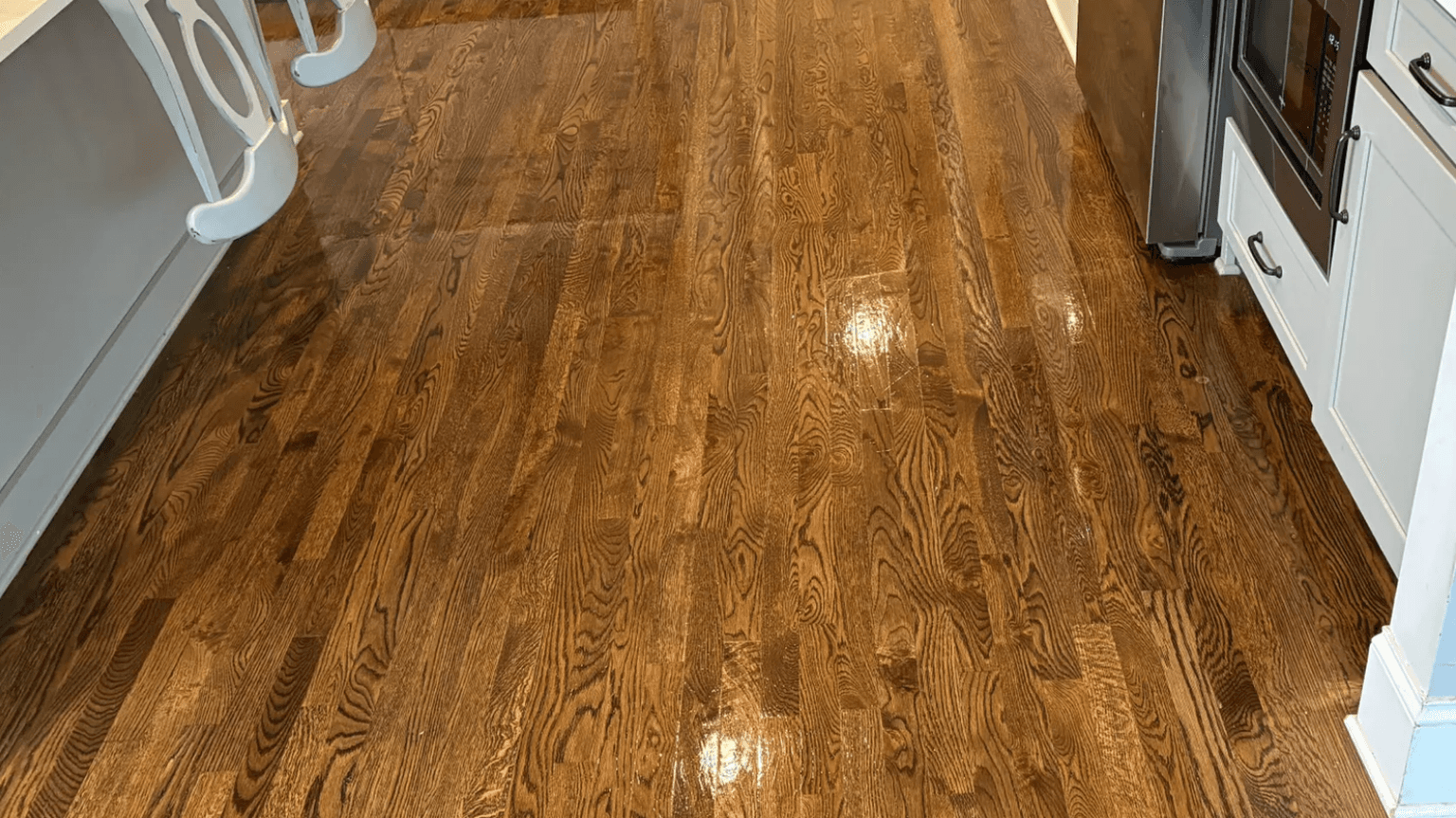
If your wood floors look cloudy, streaky, or dull in the walkways no matter how often you mop, the problem is probably sitting on top of the finish. Not in it.
Most of the hardwood we clean around Humble has a perfectly good finish under a film of old product. Shine-in-a-bottle cleaners, oil soaps, the wrong spray mop solution used every week for three years: they all leave a little behind, and the layers build up into a haze that grabs dust and footprints. People see that haze and assume the floor needs refinishing. Usually it needs cleaning.
What we do, and what we don't
We clean wood floors. We don't sand them, refinish them, or put a new coat of anything on them. If a floor needs that kind of work, it needs a refinisher, and we'll say so.
Our cleaning is pH-neutral and uses very little water. Both details matter on wood. A high-pH cleaner softens some finishes over time, and water is the enemy of anything made from trees, especially in a climate where the boards are already swelling and shrinking with the seasons. A wet mop leaves water sitting in the seams between planks, and a few years of that shows up as cupped edges and gray lines along the joints.
The process is safe for finished solid hardwood, engineered wood and prefinished planks.
What happens on your floor
Your technician starts by looking the floor over in good light: the species if it's obvious, the type of finish, scratches, worn spots, pet stains, and how heavy the buildup is. You get the price at that point.
Then the dry stuff comes up. Grit is what scratches wood, so loose dirt, pet hair and dust come off with a vacuum and microfiber before any liquid goes down.
The cleaning itself uses soft pads on a machine made for wood, with the pH-neutral solution worked across the boards. The pads loosen the buildup without scuffing the finish. Then the residue is picked up with a controlled rinse that leaves almost no water behind, and the floor gets a dry buff with clean pads.
That's it. No polish, no coating, nothing that will turn into the next layer of haze. Floors are ready to walk on within an hour, often sooner.
Scratches and pet stains
Light surface scratches can look softer once the film is gone, since the haze was catching light in them. Deep scratches, gouges, dents and worn-through finish stay. Those are refinisher problems.
Pet urine is the hard one. Odor and residue sitting in the seams can be cleaned out. Urine that soaked into the wood and turned the boards black or gray is in the wood itself, and that means sanding or replacing boards. We'll tell you which you're looking at.
Rooms and floors we see
In this area, hardwood tends to show up in dining rooms, studies and entries, with tile in the kitchen and carpet upstairs. Some older houses have solid oak strip, and newer builds lean toward engineered planks. Both clean up well.
Before we arrive, it helps to move small things like chairs, plants and floor lamps. Your technician can help with light pieces.
Between visits
Sweep or vacuum often. Use a barely damp microfiber mop with a wood-safe, pH-neutral cleaner, and skip the steam mop entirely. Put mats at the doors so sandy soil from the yard stops at the threshold. Every 6 to 12 months, depending on traffic, a professional cleaning takes off what daily care misses.
If you'd like more detail on caring for wood, our network's hardwood cleaning team at Hardwood Restore has guides on finishes and floor types. Hardwood cleaning is $50 off on the coupons page, and it's easy to combine with tile and grout or carpet cleaning in one visit. To get on the schedule, book online or ring 346-662-0980.