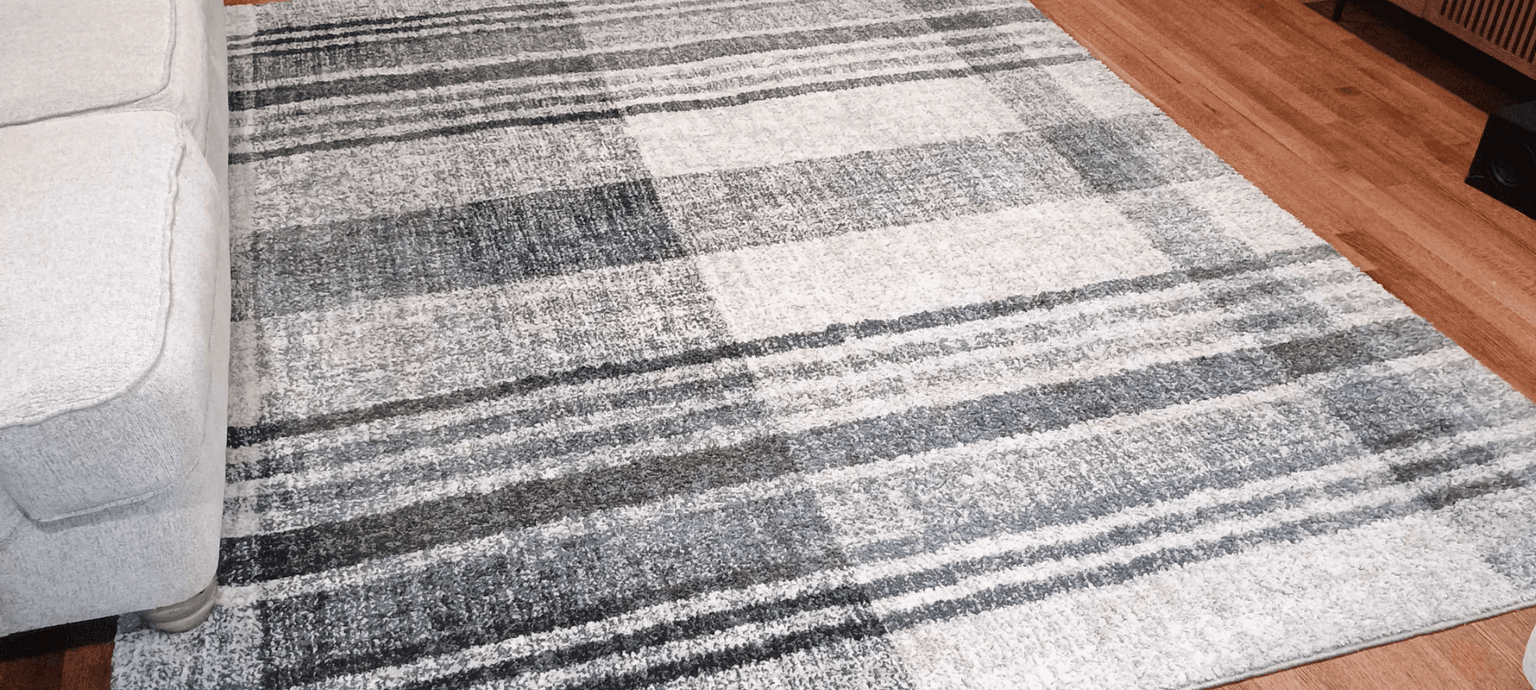
Leave the rug where it is. We clean area rugs right in your house, on the floor they already cover, so there's no rolling it up, no hauling it out to a truck, and no two weeks of bare tile under the dining table while it sits in somebody's warehouse.
That works because our process uses so little water. A rug plant has to soak a rug and then hang it to dry. We don't, which means the backing stays close to dry and the rug can usually take furniture again the same afternoon.
Cleaning a rug where it lies
It starts with a look at the rug itself. Your technician flips a corner to read the weave, checks the fiber, and tests the dyes on a spot nobody sees, because a red border that bleeds into a cream field is the one mistake you can't undo. They'll also point out pet spots, wine, or that brown ring where a potted plant sat for a year, and tell you the price before starting.
Next comes dry soil. Rugs hold a surprising amount of fine grit down near the knots, more than a household vacuum ever reaches, and pulling it out before any liquid goes on means it never gets the chance to turn into mud. On a rug by the back door, this step alone changes the color.
Then the cleaning itself: our soap-free solution goes on, gets worked through the pile, and lifts soil out with very little moisture. Spots get their own treatment, and pet areas get an enzyme aimed at the source. To finish, the pile is groomed so it lies the same direction and dries evenly. Plan on an hour or two before it's ready for chairs.
Rugs we see in Humble homes
Most of the area rugs we clean around here sit on porcelain tile or wood plank, under a kitchen table, in front of a sofa, or along a hallway. The fibers vary a lot:
- Wool, including the big flatweaves people buy for living rooms
- Synthetics like nylon, polyester and olefin (polypropylene)
- Cotton and chenille
- Jute and other natural plant fibers
- Silk and silk blends
- Shag, which takes longer to groom than anything else on this list
Jute deserves a warning. It browns if it gets too wet, so we go light on it and spot-treat carefully, and some old water stains on jute will not come out. We'd rather tell you that up front than promise a miracle. Hand-knotted Persian and other oriental rugs get extra dye testing and their own process, covered on our oriental rug cleaning page.
Spills, spots and the dog's corner
Coffee, red wine, juice, muddy paw prints and pet accidents are the usual suspects. Fresh spots come out easily. Old ones depend on the fiber: nylon gives up nearly anything, wool holds tannin stains like coffee a bit more stubbornly, and cotton flatweaves can wick a stain back up as they dry, which is why we go light on moisture with them. If you've already scrubbed a spot with a store cleaner, tell your technician. Some of those leave optical brighteners or soap that change how the spot reacts.
Before we arrive, clear small things off the rug, like plant stands and baskets. We'll work around the heavy furniture or lift the edges as needed.
A few practical notes
A living room rug does fine with a cleaning every year to year and a half. A rug under the kitchen table, or one the dog has claimed, does better every six months or so. Between cleanings, vacuum it in the direction the pile lies and turn it end to end once a season so one side doesn't take all the foot traffic and sun.
Since we're already in the house, a rug cleaning pairs well with carpet cleaning upstairs or the sofa it sits in front of. The rug coupon is $25 off, and it's on the coupons page. When you call 346-662-0980, mention the rug's rough size and fiber if you know them. Online booking works too.