
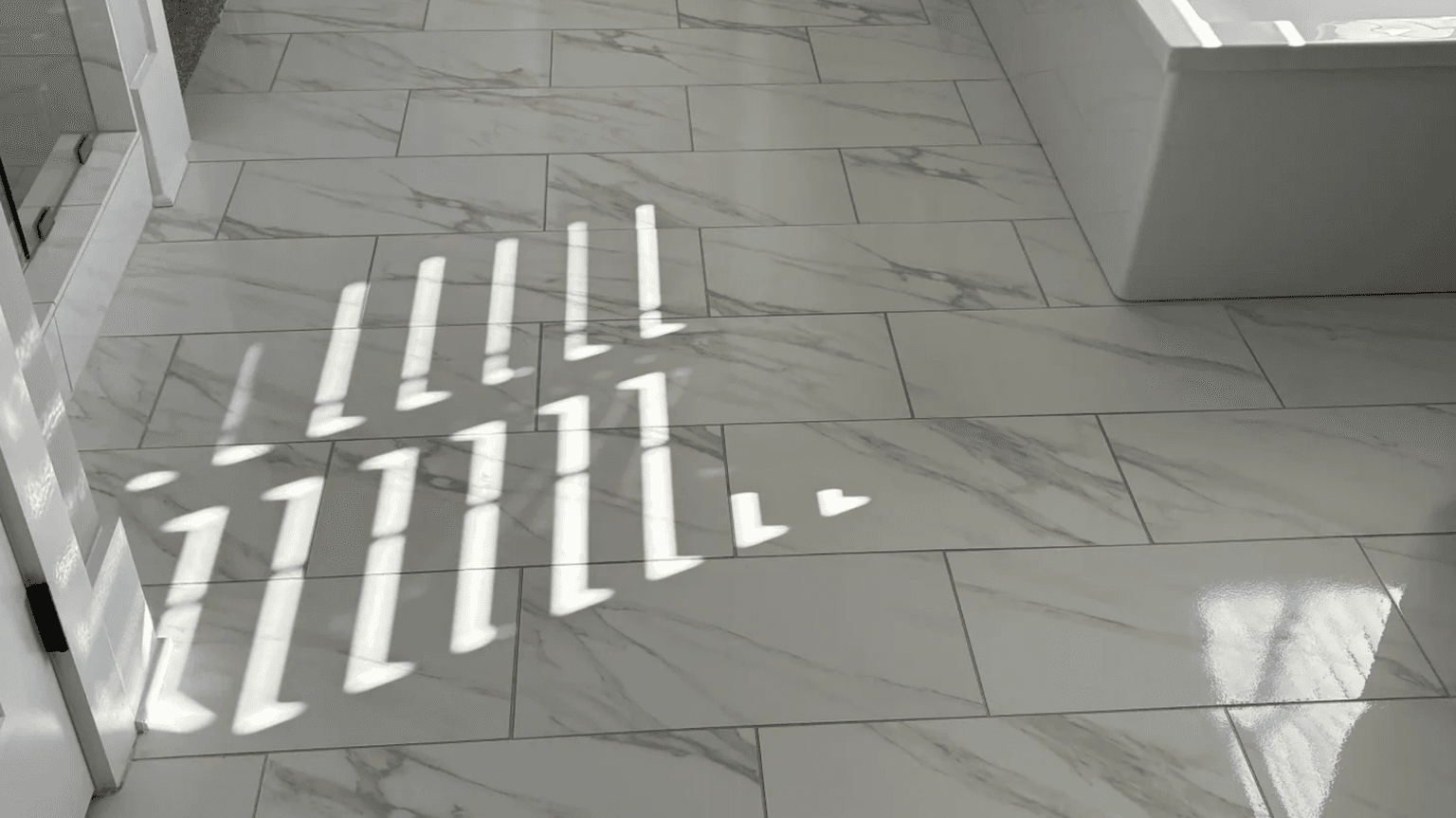
Grout starts out the color on the sample card. In a busy kitchen it's usually two or three shades darker within five years, and most homeowners assume it's stained for good. Most of the time it's just dirty.
Grout is porous. Every time a floor gets mopped, a little dirty water settles into the joints and dries there. Add cooking grease, tracked-in clay, and whatever the last floor cleaner left behind, and the lines go brown. A mop can't reach down into a joint that sits an eighth of an inch below the tile face. A machine can.
The buffer method
Our tile cleaning is built around a machine buffer. It's a heavy rotary machine with a scrubbing pad that spins against the floor and works the cleaning solution down into the grout lines, where the buildup actually lives. Hand-scrubbing with a brush and a bucket gets you part of the way, slowly, on your knees. The buffer covers a whole kitchen in the time it takes to do a few square feet by hand, and it presses evenly enough that the lines come up a consistent color.
Here's how a visit goes:
- Your technician looks over the floor first: ceramic, porcelain or natural stone, how dark the grout is, cracked tiles, loose grout, any spots where the grout has already worn away. You'll get the price before anything starts.
- Loose grit and dust get vacuumed off. Sand dragged under a spinning pad can scratch, so this part isn't skipped.
- A pre-treatment goes down to soften grease and soil in the joints.
- The buffer goes over the floor, section by section, scrubbing the tile face and the grout lines together.
- The loosened slurry gets picked up off the floor along with the cleaner, so nothing slick or sticky is left.
- You walk the floor with the technician and check the lines.
Floors are usually fine to walk on within about 30 to 60 minutes. The solution is biodegradable, and there's no bleach and no acid in it.
Where we clean tile
- Kitchens and breakfast areas
- Entryways and the run from the garage door
- Bathrooms and laundry rooms
- Mudrooms and back halls
- Living areas in homes that run tile through the whole first floor
That last one is common in Humble and the subdivisions around it, where a lot of builders tiled the entire downstairs. It's practical flooring for wet shoes and summer storms. It also means a lot of grout.
Natural stone like travertine and marble gets checked closely before the buffer comes out. It's softer than porcelain and reacts to the wrong chemistry, so your technician will talk through what's safe for your floor.
One caution before you book. Some grout is discolored all the way through. Years of bleach can do that, and so can rust from a metal can left on the floor. Cleaning will lighten it, but the color is in the grout itself. Cracked or crumbling grout needs a tile setter. We'll point it out so you're not surprised.
Between professional cleanings
A microfiber mop and a pH-neutral cleaner, used sparingly, are all most floors need. Wipe up spills before they dry. Skip bleach, because it eats grout over time. And skip the steam mop too. It drives hot dirty water straight down into the joints, which is exactly where you don't want it, and it's the single biggest reason we see grout go dark again fast.
Most kitchens and entries look their best with a professional cleaning every 12 to 18 months.
Book it
Tile and grout cleaning is $45 off with the coupon on our coupons page. Plenty of people do the tile downstairs and the carpet upstairs in the same visit. If you'd like to read more about how the buffer approach works, our network's tile and grout specialists at Tile Done Right go into the details. The line at 346-662-0980 is answered around the clock.