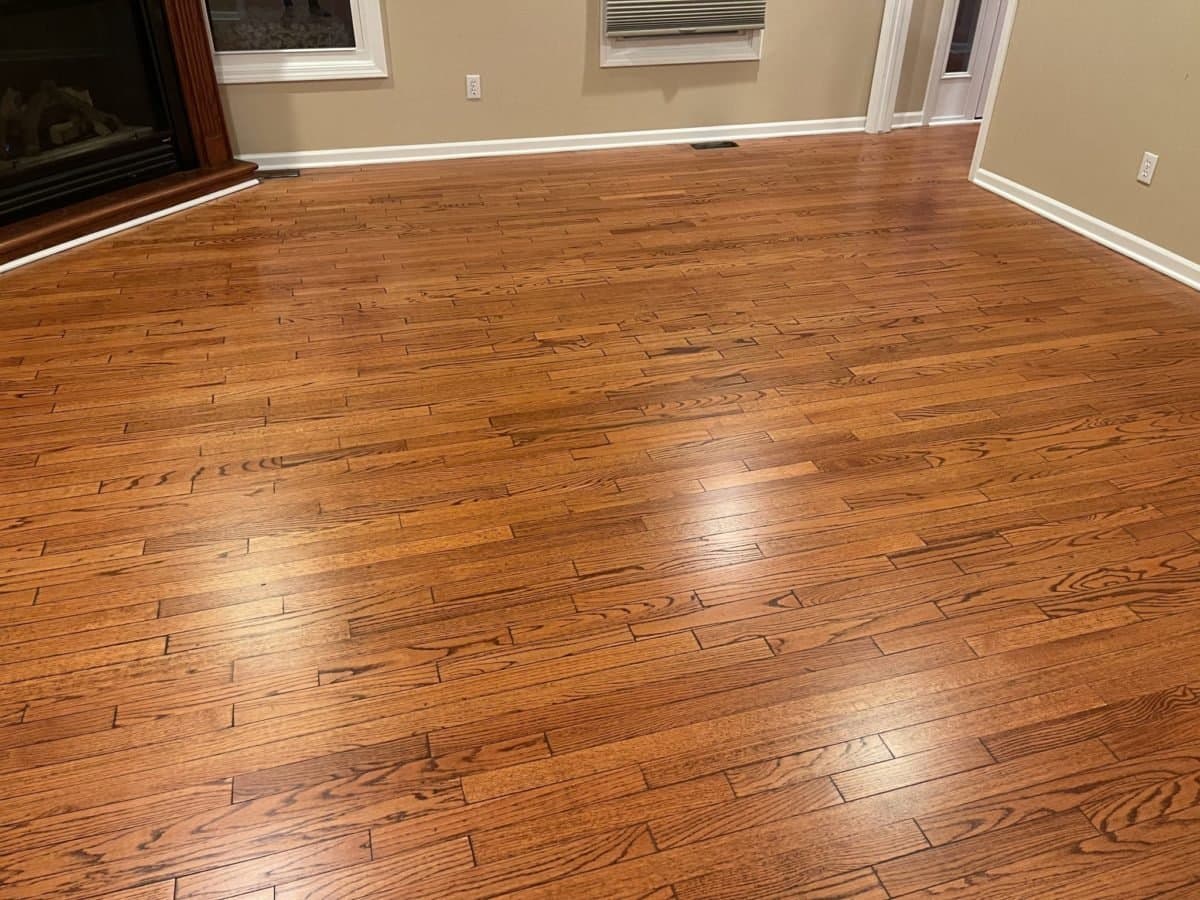
Six to twelve months. That's the honest starting answer for most homes, and then the real answer depends on who lives there, how many paws are involved, and which room you're talking about.
A kitchen floor in a house with two kids and a lab is on a very different clock from a formal dining room that gets used at Thanksgiving. So here's a schedule that accounts for that, plus the reasons wood floors lose their shine in the first place.
Why hardwood goes dull
Two things cause most of it, and neither one is usually damage to the wood.
The first is grit. Sand and fine soil ride in on shoes and paws, and around Humble there's plenty of both. Every step drags those particles across the finish like very fine sandpaper. One step does nothing. Ten thousand steps leave a haze of tiny scratches that scatter light, and the gloss goes flat. Entryways and hallways show it first, and pet nails add their own fine scratches on top.
The second is film. Shine sprays, too much floor cleaner, and a mop rinsed in dirty water all leave a thin layer behind when the water evaporates. Do that every week for a year and the layers stack up into a cloudy coating. Then dust sticks to it. Many homeowners respond by adding more shine product, which makes the cloudiness worse.
There's a third, smaller one: oil. Bare feet, pet coats and cooking grease near the stove all leave a faint greasy layer that grabs dirt. That's often why the floor in front of the range looks darker than the rest of the kitchen.
Cleaning intervals for different homes
| Household | Professional cleaning |
|---|---|
| One or two adults, shoes off, no pets | About once a year |
| Average family, light traffic | Every 9 to 12 months |
| Kids at home | About every 6 months in the busy rooms |
| Dogs or cats | Every 6 to 9 months |
| Kids plus pets, or frequent guests | Twice a year, kitchen possibly more |
These are starting points. If a floor looks cloudy at month four, it doesn't need to wait for month twelve. If it still looks good at a year, there's no reason to clean it just because the calendar says so.
Room by room
The kitchen works hardest. Grease drifts from the stove, food lands on the floor, water splashes by the sink, and everybody walks the same triangle between the fridge, the counter and the sink. Busy households should plan on every six months here.
Entryways and hallways come next. Every person who comes in crosses them. Every six to nine months is reasonable, stretching closer to a year in a quiet house. A simple test: lift a rug or slide a chair and compare the protected wood to the walkway. If you can see a line, it's time.
Bedrooms are easy. Little food, little outdoor dirt. Once a year is plenty unless a pet sleeps there.
Under area rugs, fine dust works its way through and collects on the wood. Lift the rugs every few months and clean underneath, and expect a slight color difference where the rug has shaded the floor from the sun.
Signs your floor is ready
- Light bounces off it unevenly, bright in one spot and flat a few feet away.
- The walkways look grayer than the edges.
- Sticky spots that come back after you mop.
- Hazy patches that look worse right after you clean.
- Grime packed along baseboards and in corners.
Two or three of those together means the floor is due, whatever the date of the last visit.
What our hardwood cleaning does, and what it doesn't
The solution we use on wood is pH-neutral, and we keep the water to a minimum. It's made for wood that has a finish on it, so solid hardwood, engineered planks and factory-prefinished boards are all fine. It lifts the grit, the product film and the oily layer off the surface of your existing finish. A lot of floors that owners thought needed refinishing turn out to have been under a few years of residue.
It's a cleaning, though. No sanding, no refinishing, and no new coat of anything goes down. Cleaning won't fill a gouge, replace finish that's worn through to bare wood, or remove a gray stain where water got into the boards. If your floor has those problems, a flooring refinisher is the right call, and we'll tell you so during the walk-through. Cleaning first does have one advantage there: once the film is gone, you can see what the floor actually needs.
Pet urine is the other limit. If it has soaked between boards or into the wood through a worn spot in the finish, it can stain and smell from below. Surface cleaning helps with the floor around it, but it can't reach inside the wood.
Between visits
Most of the work happens between professional cleanings, and most of it is dry.
Sweep or vacuum with a hard-floor setting several times a week, more in the kitchen. That's the single best thing you can do, because it gets the grit off before it gets walked on.
Use a mat outside and inside every door. Shake them out often. A dirty mat just becomes a grit dispenser.
Mop with barely any water and a cleaner made for finished wood, used at the strength on the label. More product isn't more clean. If the mop pad comes up gray, switch to a clean one.
Wipe spills right away, especially around the dog's water bowl. Standing water finds the seams between boards.
Put felt pads under chair legs. Keep pet nails trimmed.
Skip shine sprays entirely. In our experience they cause more dull floors than they fix.
We'd rather see a floor every year than see it once after five years of buildup. If yours is overdue, there's $50 off hardwood floor cleaning on the coupons page, and you can grab a time on the online scheduler.