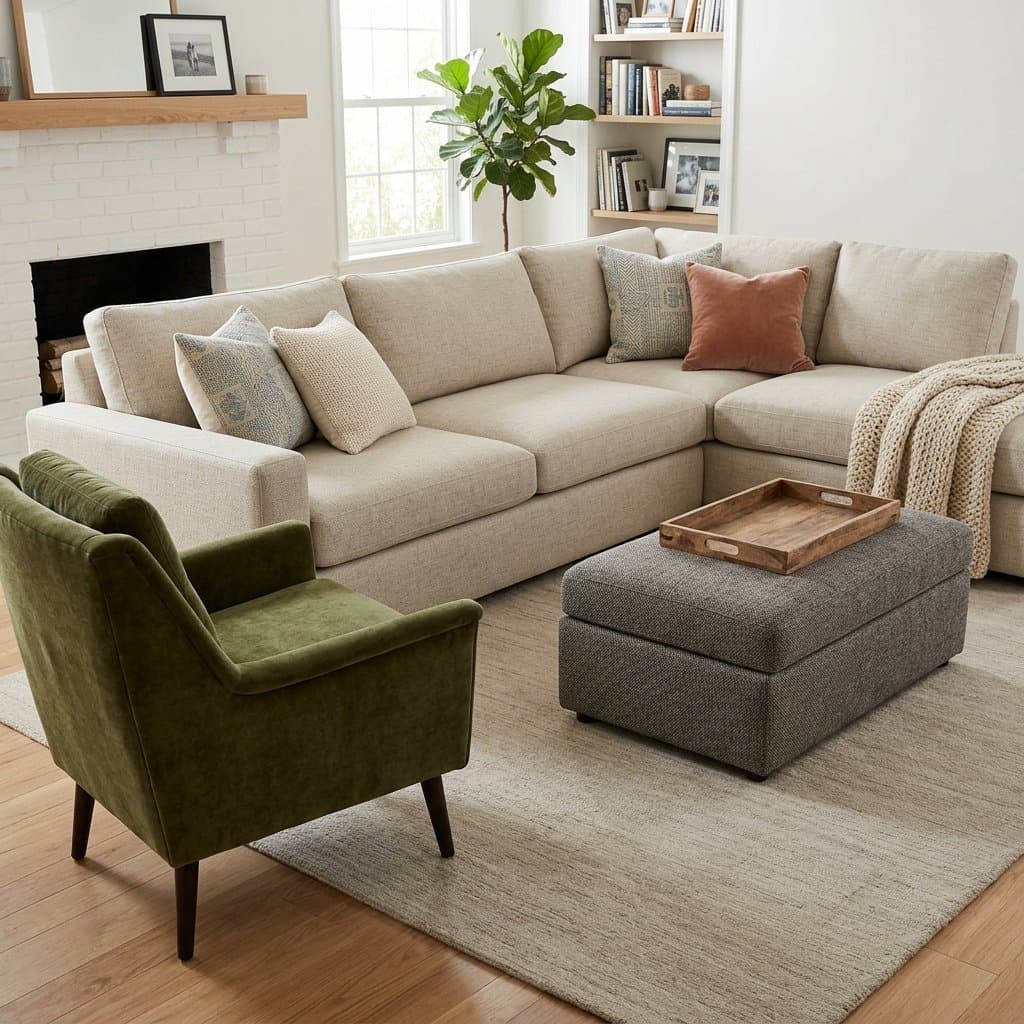
Pull every cushion off your couch tonight and put your nose right down into the deck, the flat fabric panel the cushions sit on. That's the honest smell of your sofa. The front of the seat cushions gets wiped and sprayed and fluffed, so it usually smells fine. The deck, the crevice along the back, and the inside edge of each armrest are where the real story lives.
Most couches that "smell a little off" look perfectly clean. The odor comes from things you can't see: a few crumbs ground into the seam, the oil from a hundred evenings of heads on the same armrest, the throw blanket the dog sleeps on. None of it shows up as a stain. All of it adds up.
Where the smell actually comes from
Food is the sneaky one. A dropped chip gets picked up, but the salt and grease it left behind stay in the fabric. Spilled milk or juice that got blotted "well enough" can turn sour inside the cushion foam a week later, long after the surface dried.
Pets are the obvious one, though hair is the smaller part of it. Dogs and cats carry skin oil and dander that settle into the weave wherever they nap. If your cat has one corner of the sectional it claims every afternoon, that corner will smell different from the rest of the couch, even if you lint-roll it daily.
Then there's body oil. Armrests and the top of the back cushions take it every single day. It darkens light fabric slowly and holds onto odors like a sponge.
The last source surprises people: soap. Upholstery shampoo and foaming spot cleaners leave a film when they aren't fully rinsed out, and that film grabs new dirt and smells faintly stale. A couch that's been "cleaned" with a store foam three or four times can smell worse than one nobody ever touched.
A weekly routine that takes about fifteen minutes
You don't need a fancy kit. You need a vacuum with an upholstery tool and a crevice tool, and the habit of using them.
- Pull the cushions off and vacuum the deck and the back crevice first. That's where crumbs collect.
- Vacuum both sides of every removable cushion, then the arms and the back.
- Toss pet blankets and throws in the wash. If the dog has a favorite spot, a washable cover there is the single best thing you can do for that couch.
- Flip and rotate the cushions so the same one doesn't take all the wear.
- Open a window or run a fan for an hour if the weather allows.
That's it. On a Lake Houston summer afternoon, step five may mean running the ceiling fan with the AC on, because opening the house to sticky outdoor air doesn't help fabric dry or air out. Use judgment.
Check the tag before you spray anything
Somewhere under a cushion or along the bottom of the frame there's a small tag with a cleaning code on it. Read it before any product touches the fabric.
- W means water-based cleaners are okay.
- S calls for a solvent cleaner. Plain water on S fabric tends to ring.
- WS allows either one, used carefully.
- X means vacuum only. Leave it to a professional.
People skip this step all the time, and it's how a light linen sofa ends up with a tide-mark ring around a spot that was barely visible to begin with. If your couch says S or X, put the spray bottle down.
Even with a W code, test any product on a hidden spot first, like the back of a skirt or the underside of a cushion. Use less than you think. Blot from the outside of the spot toward the middle, then let it dry completely before you judge the result. Fabric often looks worse wet than it will dry.
A word on removable covers
Plenty of cushion covers have zippers that were put there for manufacturing, not for washing. Covers can shrink in the wash and never go back on. If the tag doesn't say the covers are washable, don't wash them.
When deodorizers are just covering it
Fabric sprays work by adding scent. A few of them also trap odor molecules for a while. Neither one removes the thing that's making the smell, so the odor comes back as soon as the perfume wears off, and now you've added another layer of product to the fabric.
You can usually tell you've hit this point when:
- the smell returns within a day or two of spraying
- you notice the odor most when the room is warm or closed up
- a cushion smells strongest at the zipper, which means it's in the foam
- a pet has had an accident on the couch, even once
Pet urine is the clear line. It soaks past the fabric into the cushion and sometimes into the frame padding, and no air freshener reaches it. That needs an actual odor treatment, the same live enzyme approach we use on carpet, worked down into the cushion.
What a professional clean changes
When we clean a couch, the first few minutes go to looking at it: the tag, the fabric, where the dark spots and odor spots are, and what's been used on it before. Then the soil gets loosened and pulled out with a low-moisture process that doesn't leave soap behind, so the fabric doesn't get sticky and start re-soiling a month later. Pet spots get their own treatment. Most furniture is dry and usable the same afternoon.
What it can't do is fix worn fabric. If the armrest is threadbare or the seat foam has collapsed, cleaning makes it look better and smell better. It doesn't make it new.
For most families, a professional upholstery clean once a year is plenty. Homes with pets that are allowed on the furniture, or with little kids eating snacks on the couch, usually do better every six to nine months.
One small habit worth starting
Keep a dedicated "couch blanket" for the dog and a second one for movie-night snacks, and wash both weekly. It sounds too simple to matter. It's the difference between a couch that needs help every six months and one that goes a year and a half.
When the blankets and the vacuum aren't keeping up anymore, our upholstery coupon takes $25 off, and you can grab a time at /schedule-online/ or call 346-662-0980.