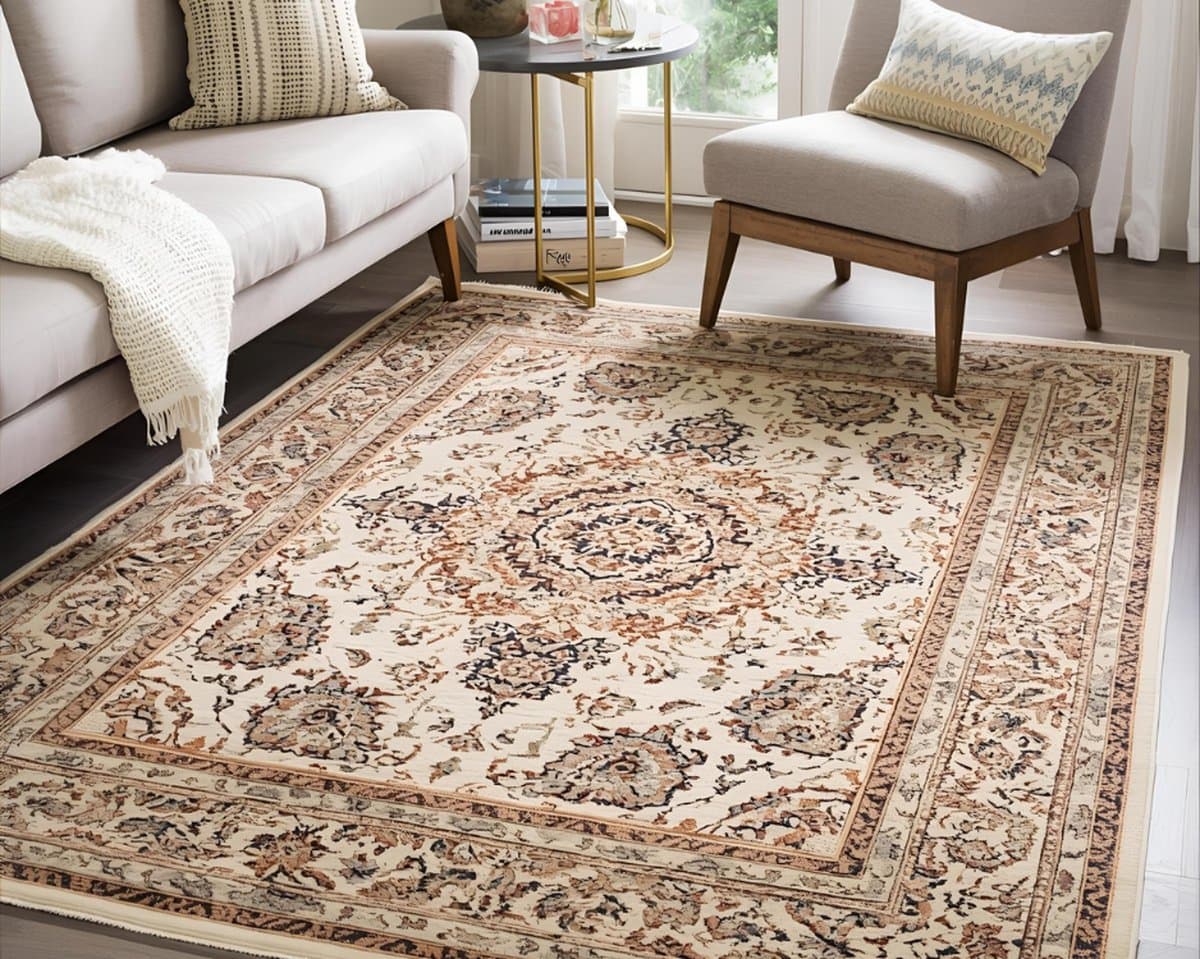
Picture a red border running into an ivory field. A pink haze creeps an inch or two inward from the edge, all the way around the rug. Once it's set, it is very hard to undo, and almost every time we've seen it, the cause was the same: someone cleaned a hand-knotted rug like it was wall-to-wall carpet.
Oriental rugs are tougher than people think in daily use. Good wool can take decades of foot traffic. Where they're fragile is in cleaning, and the reasons come down to what they're made of and how they're built.
Wool and silk act differently from synthetic carpet
Most wall-to-wall carpet in Humble homes is nylon or polyester. Those fibers are plastic. They absorb very little. They tolerate a wide range of cleaners, and they forgive a lot.
Wool is animal hair. It absorbs moisture, it's sensitive to high-pH cleaners (the alkaline stuff a lot of carpet shampoos use), and aggressive agitation can make the fibers fuzz up or felt. Wool also holds soil deep down near the knots, where it grinds against the fibers every time someone walks across.
Silk, or the "art silk" in many cheaper rugs (usually rayon or viscose), is touchier still. Viscose in particular can yellow, lose its sheen, and get stiff when it's wet. Silk and viscose need a very light touch.
Dyes don't always stay put
This is the big one. Rugs get their pattern from dyes, and not every dye is stable when it meets water or cleaning solution. Deep reds and dark blues are the usual troublemakers. Older rugs may use natural dyes that behave unpredictably. A rug that was badly cleaned once before, or one that's had pet accidents or a lot of sun, can have weakened dyes even if it was colorfast when new.
So the first thing we do with any oriental rug is test it. We dampen a small spot in each color, usually in a corner or on the back, and press a white cloth against it to see if any color transfers. If a dye moves, that changes the plan: a different solution, much less moisture, or in some cases telling you honestly that we'd leave the rug alone.
Construction: the part underneath the pattern
The foundation
Flip a hand-knotted rug over and you'll see the pattern repeated on the back, along with the warp and weft threads it's tied onto. That foundation is usually cotton. Cotton soaks up water fast and dries slowly, and when it stays wet it can show brown staining, called browning or cellulosic browning, that wicks up into the wool face. Overwetting a cotton-foundation rug is one of the quickest ways to damage it.
Hand-knotted, tufted and flatweave
Hand-knotted rugs are strong, but heavy scrubbing can distort the pile. Tufted rugs look similar from the top but have a glued backing covered with a cloth, and that latex glue can break down, smell, and shed powder when soaked. Flatweaves like kilims are thin, which sounds easy, but their dyes can be among the most likely to bleed.
The fringe
Fringe is usually the ends of the warp threads, so pulling or trimming it damages the rug itself. Cotton fringe gets dingy fast, catches in vacuum beaters, and tears. It needs gentle hand cleaning, never a beater bar.
Pet accidents on wool are a special case
Pet urine is hard on any rug, and it's worse on wool. Urine is acidic when fresh and turns alkaline as it ages, and that change can shift dyes, which is why old pet spots on oriental rugs often show up as a color change you can't get out. It also soaks right into the cotton foundation.
If it just happened, blot hard with white towels, use as little water as you can, and get the spot dry quickly. Don't use a household carpet spot remover on wool; many are high-pH and can set the dye problem you're trying to avoid. If the spot is old or the rug smells when the weather turns damp, call us. Our live enzyme treatment can be used on rugs, but on a good wool piece we'd want to test the dyes first.
How we clean an oriental rug in your home
We don't take rugs away. The cleaning happens right in your house, which a lot of people prefer, since a large rug doesn't disappear for two weeks and you can watch the work.
It starts with looking the rug over: fiber, construction, any weak spots or old repairs, pet areas, and the dye test. Loose soil comes out first, since dry grit is the stuff that wears wool down. Then the rug is cleaned with a gentle, soap-free solution and very little moisture, which is what wool and cotton foundations want, and we pay attention to the fringe separately. The rug dries quickly because it was never soaked.
The honest limit: cleaning won't reverse dye bleeding that already happened, sun fading, or moth damage. It can make a rug look a lot better around those problems. If your rug is an heirloom antique or has dye bleeding already, we'll tell you if we think a specialist restorer is a better call.
Between cleanings
- Vacuum the face regularly with suction only, or with the beater turned off. Go with the direction of the pile.
- Turn the rug every six months so sun and traffic hit it evenly.
- Use a good rug pad. It keeps the rug from sliding and reduces wear on the foundation.
- Keep the fringe out of the vacuum.
- Have it professionally cleaned every 12 to 18 months in a normal room, sooner with pets or heavy traffic.
Our rug coupon takes $25 off, and the whole job happens without the rug leaving your house. Pick a time online at /schedule-online/, or phone 346-662-0980 and tell us what kind of rug you have.